President acknowledged the cruel treatment of servicemen?
Emomali Rahmon urged commanders to treat soldiers “like their own children.” Photo: Internet On February 23, the Supreme Commander of the Armed Forces of the country, President Emomali Rahmon, participated in and spoke at a ceremonial meeting dedicated to the 30th anniversary of the creation of the Armed Forces of Tajikistan. In his speech, the […]
AZDA.TV· Send to others
Emomali Rahmon urged commanders to treat soldiers “like their own children.”
Photo: Internet
On February 23, the Supreme Commander of the Armed Forces of the country, President Emomali Rahmon, participated in and spoke at a ceremonial meeting dedicated to the 30th anniversary of the creation of the Armed Forces of Tajikistan.
In his speech, the President of Tajikistan indirectly acknowledged that there is abuse of soldiers within the ranks of the Tajik Armed Forces.
Emomali Rahmon emphasized in his address that “establishing professional training and education of personnel” is a primary task for the command staff and that “each leader and officer is required to have a high level of responsibility.”
Rahmon noted that “leaders and officers should treat soldiers like their own children and show care for them.”
“Personally, as the Supreme Commander of the Armed Forces, I love each soldier like my own children, and I always strive to ensure that the best conditions for service and life are created for all military personnel, especially soldiers,” Rahmon said.
According to official data, over the past 30 years, “to provide highly qualified personnel for the national army, other military structures, and law enforcement agencies, more than 28,000 specialists have been trained both inside and outside the republic, and today more than 80 percent of our Armed Forces officers are professional officers, that is, graduates of military institutes and academies.”
It is said that abuse of soldiers, particularly recruits in the ranks of the Tajik Armed Forces, remains one of the discussed issues in recent years. Most young people refuse to serve in the army precisely because of the non-statutory relationships among military personnel.
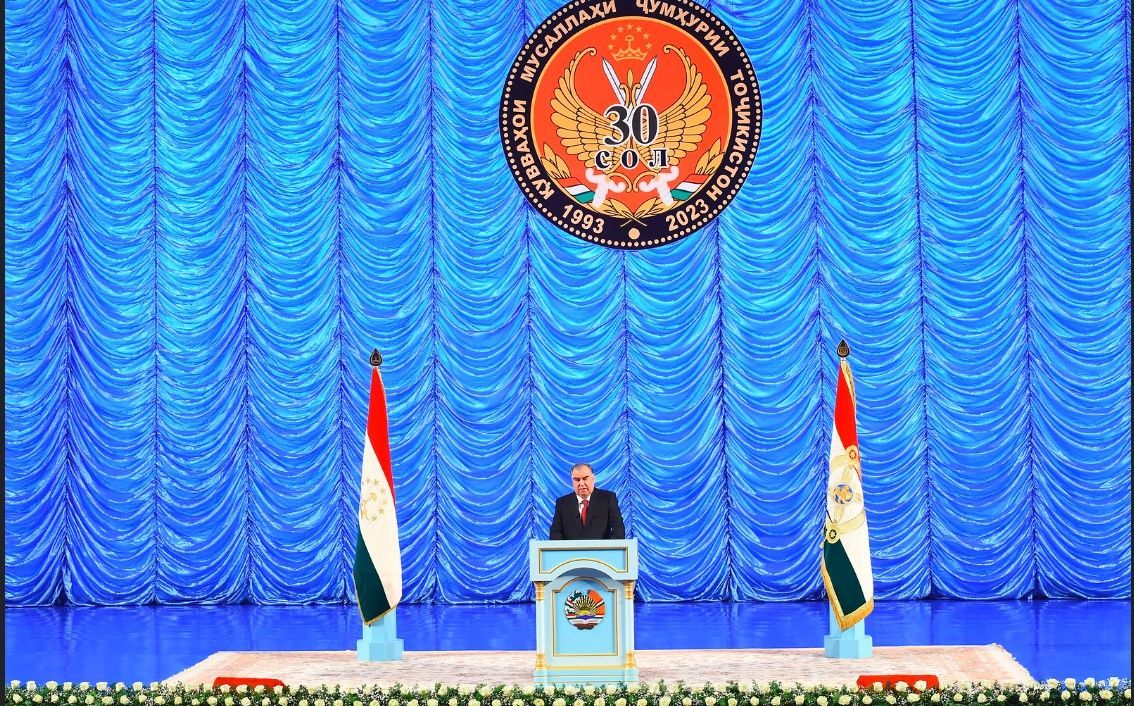 Photo: Internet