News
HUMAN RIGHTS MIGRATION
Revenge for the demand for respect?
In Tajikistan, experts are discussing the situation regarding the negative attitude towards migrants in Russia, which has forced the Foreign Ministry to hand a note of protest to the Russian ambassador, reports Radio Ozodi. After the terrorist attack in Moscow, Russian authorities began to expel migrants from Tajikistan and other Central Asian countries. For a […]
In Tajikistan, experts are discussing the situation regarding the negative attitude towards migrants in Russia, which has forced the Foreign Ministry to hand a note of protest to the Russian ambassador, reports Radio Ozodi.
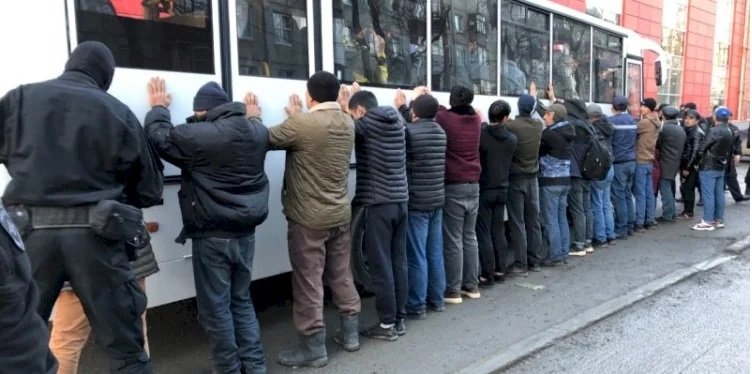
After the terrorist attack in Moscow, Russian authorities began to expel migrants from Tajikistan and other Central Asian countries. For a month now, mass raids on working migrants have been taking place in Russia: law enforcement officers are taking people from dormitories, workplaces, and even mosques. Foreigners without the necessary documents are being deported en masse from Russia, and those who arrive are often simply not allowed into the country under the pretext of “public danger.”
Expert Abdumalik Kodirov believes that the pressure from Russian authorities on Tajik migrants is a kind of act of revenge that will not benefit Moscow. “On the other hand, the disinterest of Tajik youth in cultural adaptation during migration and the lack of knowledge of the Russian language may be another reason for Russia’s negative attitude towards Tajik migrants,” he said on April 29 in an interview with Radio Ozodi.
“Perhaps another reason lies in the fact that in recent years, especially after the start of Russia’s war in Ukraine, Tajikistan’s attitude towards Russia has changed somewhat, and President Rahmon has publicly stated that he wants Tajiks to be treated with respect. Perhaps after this, the feeling of revenge has overwhelmed today’s Russian leadership, and the hour of reckoning has come after the terrorist attack at ‘Krokus,’ where the main suspects are citizens of Tajikistan. Russian authorities are taking this opportunity, as they have found a ‘scapegoat,'” the interlocutor noted.
In October 2022, Tajikistan’s President Emomali Rahmon, at the “Central Asia – Russia” summit in Astana, urged Russian leader Vladimir Putin to treat Tajikistan and other countries in the region with respect. “Where and what have we violated? Where and with whom have we not greeted properly? We have greeted and have never violated anything. We have always respected the interests of our main strategic partner, but we want to be respected too. Are we some kind of foreigners on par with African countries?” Rahmon emotionally stated at that time.
Some experts believe that the activation of Tajikistan’s cooperation with European countries has puzzled Russia. “Meetings of the President of Tajikistan at the highest level with the UK Foreign Secretary, the Pope in the Vatican, as well as with the leadership of Italy – those countries that, against the backdrop of the military-political conflict between Ukraine and Russia, have many contradictions with the Kremlin within the framework of the European Union, NATO, and other alliances, have caused concern in Russia, and Moscow has decided to use migrants in retaliation. However, Tajikistan has its advantages from cooperation with European countries, and it is based on a multi-vector foreign policy,” shared his opinion political scientist Shokirdzhon Hakimov.
In the past week, hundreds of Tajik citizens have been stranded in Moscow airports and at the Russian-Kazakh border, as they are not being allowed entry into Russia without any explanation. Concerns about increasing pressure on Tajik migrants have been voiced more frequently in recent days. Against this backdrop, the Tajik Foreign Ministry summoned Russian Ambassador Semen Grigoryev twice: first on April 26, when the ambassador was informed of the Tajik side’s concern regarding the growing number of unjustified refusals of entry into Russia for Tajik citizens, and for the second time on April 29, when the foreign ministry expressed “serious concern about the cases of a distinctly negative attitude towards Tajik citizens on the territory of the Russian Federation, as well as the widespread violation of their rights and freedoms,” handing a note of protest to the Russian ambassador in Dushanbe.
Meanwhile, the official representative of the Russian Foreign Ministry, Maria Zakharova, stated that delays in passport control for foreign citizens at border crossing points of the Russian Federation, particularly difficulties in crossing the land Russian-Kazakh border, are related to increased security measures due to the ongoing terrorist threat following the attack at “Krokus City Hall.” “These measures are temporary and are implemented regardless of the nationality of the entering individuals,” she reported.
Analyst Nabi Yusupov disagrees with such assertions from the Russian side, as he believes that if Russia intends to combat crime, it should treat citizens of all countries equally. According to our interlocutors, the negative attitude of Russian authorities towards Tajik migrants could have adverse consequences for both countries. For many Tajik citizens, labor migration to Russia remains one of the main sources of income. Experts believe that their mass return would impact the economic situation in the country, which largely depends on remittances from migrants.
Expert Abdumalik Kodirov believes that Russia, which has become preoccupied with expelling migrants from the country, could find itself at a loss. According to him, the negative attitude of Russia towards Tajik migrants observed these days will not last long. Because, in his opinion, Russia is not in a position to lose an important partner in the region or to use pressure to achieve its goals.
Tajikistan and Russia are considered strategic partners. Tajikistan, as part of several regional organizations, mostly supports the actions of the Kremlin. The largest Russian military base abroad is also located in Tajikistan. A sharp increase in pressure from Russian state structures on migrants from Central Asian countries has been observed following the attack on the Moscow concert hall “Krokus City Hall.” Most of the accused in this case are citizens of Tajikistan.