News
MIGRATION
Russia tightens the process for obtaining a work permit
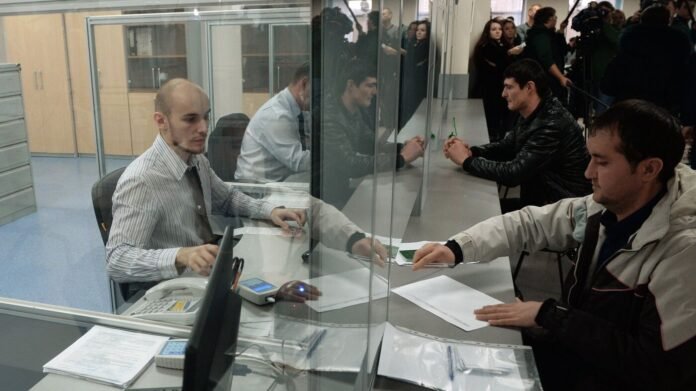
State Duma deputies are considering the possibility of denying patent issuance to individuals with debts. The Chairman of the State Duma Committee on Labor, Social Policy and Veterans Affairs, Yaroslav Nilov, informed the media that deputies will review a draft law to deny the issuance or extension of work patents to foreigners who do not […]
State Duma deputies are considering the possibility of denying patent issuance to individuals with debts.
The Chairman of the State Duma Committee on Labor, Social Policy and Veterans Affairs, Yaroslav Nilov, informed the media that deputies will review a draft law to deny the issuance or extension of work patents to foreigners who do not comply with Russian court decisions, including those related to debts.
Nilov stated that it is necessary to provide a mechanism whereby if a migrant is a chronic debtor, and the court has issued a corresponding decision, but the migrant does not pay this debt, this should also be grounds for denying the issuance of a patent.
The parliamentarian noted that this draft law has been sent to the government and will be submitted to the State Duma during the spring session.
He explained that this initiative could become “one of the stimulating tools for combating debts among foreigners, and the debtor will be required to pay off the debt in order to extend the patent.
At the same time, the situation with labor migrants in the Russian labor market has already worsened against the backdrop of the authorities’ tightening migration policy. Recently, in several regions, the cost of work patents has increased, which has raised the financial burden on foreign citizens.
In addition, many subjects of the Russian Federation have imposed restrictions on the employment of migrants in certain sectors — including retail, passenger transport, services, and other types of activities. This is occurring amid growing anti-migrant rhetoric in Russia. Russian nationalists, politicians, and State Duma deputies often attempt to limit their work and reduce their numbers by enacting increasingly stringent laws.
Some deputies even propose introducing a visa regime with Central Asian countries, from which most migrants performing heavy work in Russia come.
Experts believe that the combination of these factors may lead to a reduction in the number of legally employed migrants and increase pressure on the labor market, especially in regions with a high dependence on foreign labor.
Earlier, Moscow Mayor Sergey Sobyanin stated that there is a shortage of half a million workers in the capital. In response to the dissatisfaction of some regarding the influx of low-skilled migrants who do not speak the language, he suggested that those with higher education, including doctoral degrees, take a broom and go to sweep the courtyards in Moscow.