News
HUMAN RIGHTS TAJIKISTAN
State Department Report: There are about 400 political prisoners in Tajikistan
The situation with human rights in Tajikistan in 2023 has not undergone significant changes, according to a new country report from the U.S. Department of State, published on April 23. The authors of the report point to the unchecked power of President Emomali Rahmon and his family in the economy and politics; the increase in […]
The situation with human rights in Tajikistan in 2023 has not undergone significant changes, according to a new country report from the U.S. Department of State, published on April 23.
The authors of the report point to the unchecked power of President Emomali Rahmon and his family in the economy and politics; the increase in the number of political prisoners and convicted journalists, the impunity of law enforcement officers who have committed torture and caused the deaths of detainees, serious problems with the independence of the judiciary, transnational repression, restrictions on freedom of speech and the internet, etc.
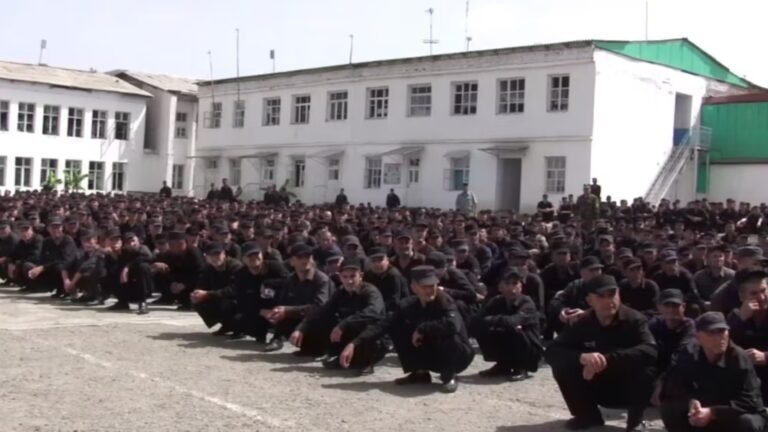
The government of Tajikistan denies the existence of political prisoners in the country. The report states that, according to estimates from civil society organizations, there are about 400 political prisoners in Tajikistan. Most of them are activists and participants in protests from the Gorno-Badakhshan Autonomous Region, detained in 2022 for expressing their views or criticizing the authorities’ actions during the suppression of protests.
The authorities of Tajikistan stated that in the spring of 2022, an operation was conducted in GBAO to detain members of organized criminal groups. Residents and activists of the region consider this “operation” to be repression against the peaceful population.
The report pays special attention to the persecution of President Emomali Rahmon’s opponents abroad as another alarming phenomenon. The government reported that in the first half of 2023, 36 people were returned from abroad on charges of “extremism” and “terrorism”: 18 from Russia, 15 from Turkey, and one each from Germany, Uzbekistan, and Poland. All were sentenced to long prison terms.
In particular, as noted in the State Department report, the authorities of Germany deported Abdullo Shamsiddin, the son of one of the leaders of the Islamic Renaissance Party, Shamsiddin Saidov, due to issues with immigration legislation. Upon his return, he was arrested and charged with “public calls for violent change of the constitutional order,” for which he received a seven-year prison sentence.
In the same year, Saidumar Saidov, the nephew of Shamsiddin Saidov, was sentenced to six years in prison for “membership in a banned organization.” Experts describe both cases as “politically motivated.”
The report mentions another case of transnational persecution involving Nizomidin Nasriddinov, a member of the banned “Group 24,” who was deported from Belarus and sentenced to 8.5 years in prison.