News
AFGHANISTAN TAJIKISTAN
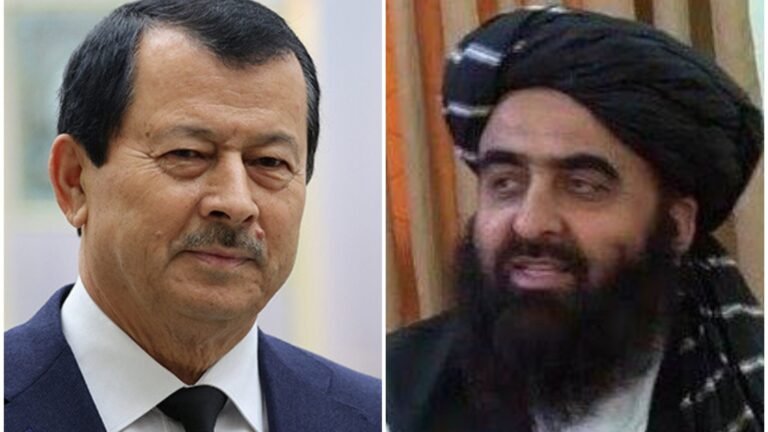
Tajik delegation held a meeting with the Taliban foreign minister
14 officials from Tajikistan have traveled to Kabul for negotiations with high-ranking representatives of the Taliban government in Afghanistan. According to Afghan media, the delegation includes the first deputy head of the Border Forces of the State Committee for National Security, a special envoy from the Ministry of Foreign Affairs, the head of the Border […]
14 officials from Tajikistan have traveled to Kabul for negotiations with high-ranking representatives of the Taliban government in Afghanistan.
According to Afghan media, the delegation includes the first deputy head of the Border Forces of the State Committee for National Security, a special envoy from the Ministry of Foreign Affairs, the head of the Border Service, a leading national security expert, the first deputy head of the Gorno-Badakhshan Autonomous Region (GBAO), the head of the State Committee for National Security, and other representatives of Tajikistan’s security forces. The delegation held a meeting with the Taliban government’s Foreign Minister Amir Khan Muttaqi.
It is reported that during the negotiations, the parties discussed key political issues, the current state of bilateral relations between Kabul and Dushanbe, and paid special attention to the prospects for expanding trade and economic cooperation.
The delegation is also expected to meet with the Taliban government’s Prime Minister Muhammad Hasan Akhund and the head of intelligence Abdul Haq Wasiq.
Other details of the Tajik delegation’s meeting with the Taliban leadership are unknown. The authorities of Tajikistan have not yet commented on this trip.
However, Afghan media close to the Taliban government claim that the purpose of the Tajik delegation’s visit to Kabul is to negotiate with Taliban representatives on expanding political cooperation, security collaboration, future joint projects, and regional relations. Another issue that may be discussed at this meeting is the operation of the Afghan embassy in Dushanbe, which is still under the control of the ousted Afghan government. The Taliban are seeking control over the embassy.
This visit by a high-ranking Tajik delegation comes amid reports of another Tajik delegation led by the deputy head of the Khatlon region Zarobiddin Faizullozoda traveling to the city of Kunduz at the invitation of the Taliban and meeting with the governor of that province, Mullah Muhammad Khan.
The governor of Balkh province in Afghanistan, Yusuf Wafa, has also arrived on an official visit to Dushanbe and met with the chairman of the State Committee for National Security of Tajikistan, conducting negotiations with Tajik representatives of security and border structures.
The press service of the Balkh province administration notes that the meeting discussed the establishment of bilateral relations, the expansion of diplomatic, cultural, trade, economic, and scientific ties between Dushanbe and Kabul. The governor of Balkh province from the Taliban also held meetings with the chairman of the Council of Ulema and the Mufti of Tajikistan, Saidmukarram Abdulqodirzoda. In turn, Saymumin Yatimov also recently visited Kabul and met with Taliban representatives.
The authorities of Tajikistan have neither confirmed nor denied these visits and meetings of representatives of the country with the Taliban. The silence of the Tajik side is particularly noticeable against the backdrop of Tajikistan remaining the only country in Central Asia that officially states it does not support direct relations with the Taliban and has repeatedly criticized the Taliban government.
In recent months, a number of clashes have occurred at the border between Tajikistan and Afghanistan between Tajik border guards and forces. It was reported that the conflict flared up due to the change in the course of the Panj River by Afghan mining companies.
After this conflict, a video appeared online showing Tajik border guards and Afghan Taliban sitting at a negotiation table, engaged in a tense conversation. The parties mutually accused each other of providing shelter to political opponents.