News
POLITICS
Tajikistan authorities acknowledged the ineffectiveness of state ideology
The Deputy Foreign Minister of Tajikistan at a high-level conference in Minsk acknowledged that the state ideology and propaganda tools of the Tajik government have proven ineffective and have failed to counter terrorist and extremist groups. On October 26 and 27, a high-level conference titled “Eurasian Security: Reality and Prospects in a Transforming World” took […]
The Deputy Foreign Minister of Tajikistan at a high-level conference in Minsk acknowledged that the state ideology and propaganda tools of the Tajik government have proven ineffective and have failed to counter terrorist and extremist groups.
On October 26 and 27, a high-level conference titled “Eurasian Security: Reality and Prospects in a Transforming World” took place in Minsk.
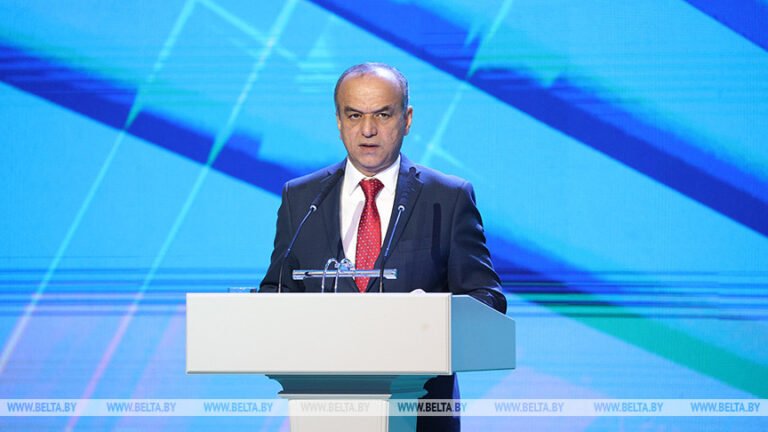
Deputy Foreign Minister of Tajikistan Sodik Imomi led the Tajik delegation at the international conference.
“We see the spread of extremely destructive ideology of religious radicalism in the Central Asian region as the biggest problem,” stated Sodik Imomi.
The Deputy Foreign Minister of Tajikistan emphasized that “terrorist and extremist groups, taking advantage of the weak (government) ideology and (lack of) religious knowledge, attract people to their ranks, especially the youth.”
According to official statistics provided by the authorities and especially the top leadership of Tajikistan, over 97 percent of the country’s population practices Islam. Adolescents and youth make up more than 35 percent of the country’s population. The Tajik government does not offer any religious education programs in schools and universities.
The authorities of Tajikistan speak of the “spread of destructive ideology” while the government of Emomali Rahmon has banned the activities of all religious educational institutions in the country over the past 14 years. The religious restrictions imposed by Emomali Rahmon on Muslims in Tajikistan are considered unprecedented in the Central Asian region.
The high-level conference “Eurasian Security: Reality and Prospects in a Transforming World” concluded its work in Minsk on October 27. The conference was attended by representatives of the CSTO, SCO, CIS member states, and others, as well as leaders of international organizations – a total of 300 experts from approximately 30 countries.