News
ECONOMY
Tajikistan plans to double the production of “green energy”
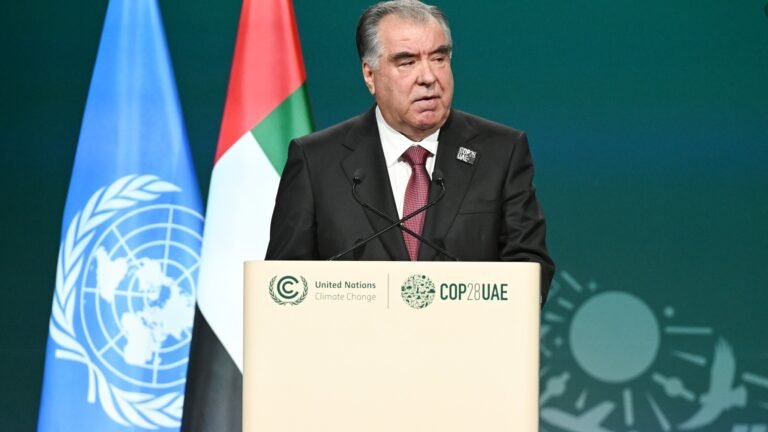
The authorities of Tajikistan aim to increase energy production from renewable sources to promote a “green economy.” During a speech at the Plenary Session of the 28th Conference of the Parties to the United Nations Framework Convention on Climate Change, President of Tajikistan Emomali Rahmon stated that Tajikistan “produces 98 percent of its electricity from […]
The authorities of Tajikistan aim to increase energy production from renewable sources to promote a “green economy.”
During a speech at the Plenary Session of the 28th Conference of the Parties to the United Nations Framework Convention on Climate Change, President of Tajikistan Emomali Rahmon stated that Tajikistan “produces 98 percent of its electricity from hydroelectric power plants.”
According to him, the country ranks “sixth in the world in terms of the percentage of ‘green energy’ generated from renewable sources.”
“We intend to double our capacity for producing ‘green energy’ in the future as a main foundation for promoting a ‘green economy,'” Rahmon said.
Rahmon also emphasized that Tajikistan, “93 percent of whose territory consists of mountains, is one of the most vulnerable countries to the impacts of climate change and faces floods, landslides, avalanches, and other water-related natural disasters every year.”
Rahmon also pointed to glacier melting as a consequence of the negative impact of climate change.
According to him, over the past decade, “more than one thousand of the 13 thousand glaciers in Tajikistan, which are the source of 60 percent of our region’s water resources, have melted.”
Rahmon called on the international community to “facilitate the timely implementation of other goals and commitments related to water.”
At the same time, Rahmon emphasized that Tajikistan has created and decided to make its initial financial contribution to the “International Fund for Glacier Conservation” and urged the global community and international organizations to contribute to this fund.