News
ENVIRONMENT TAJIKISTAN
Tajikistan ranked among the top five countries with the dirtiest air
The dirtiest air, according to IQAir, is in Bangladesh, Pakistan, India, Tajikistan, Burkina Faso, Iraq, and the UAE. Only seven countries in the world achieved safe levels of air pollution in 2023, according to a new report by the Swiss air quality technology company IQAir. IQAir specialists analyzed air quality data from 30,000 monitoring stations […]
The dirtiest air, according to IQAir, is in Bangladesh, Pakistan, India, Tajikistan, Burkina Faso, Iraq, and the UAE.
Only seven countries in the world achieved safe levels of air pollution in 2023, according to a new report by the Swiss air quality technology company IQAir.
IQAir specialists analyzed air quality data from 30,000 monitoring stations located in 7,323 cities across 130 countries.
The seven countries where air quality met the safety standard of five micrograms per cubic meter of air (µg/m3) or less are Australia, Estonia, Finland, Grenada, Iceland, Mauritius, and New Zealand.
Bangladesh ranked first, with PM2.5 levels 15 times above the norm. Pakistan came in second with PM2.5 levels 14 times above safe standards. India ranked third, with levels 10 times above the norm.
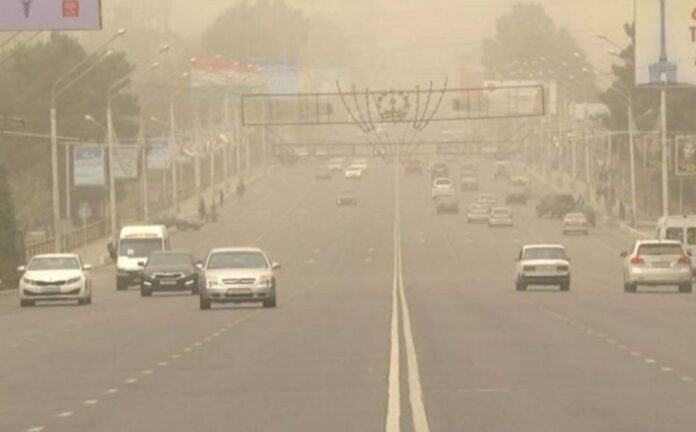
In Tajikistan, this figure is 134, where PM2.5 levels exceed safe standards by nine times, placing Tajikistan fourth in pollution levels.
Burkina Faso is in fifth place.
IQAir specialists emphasize that air pollution poses the most serious threat to the state of the environment. Every year, more than 6 million people worldwide die due to the effects of air pollution. This is more than deaths from HIV/AIDS or malaria. The total economic damage from air pollution is estimated at $8 trillion.
PM 2.5 refers to the smallest particles in the air, ranging from 0.001 to 2.5 micrometers (µm), which is much thinner than a human hair. Due to their extremely small size, these particles of various origins, which are constantly present in the air, enter the lungs when inhaled and subsequently penetrate the bloodstream. They can accumulate in the body, potentially leading to various diseases.