News
AFGHANISTAN HUMAN RIGHTS
Taliban call on the West to cooperate
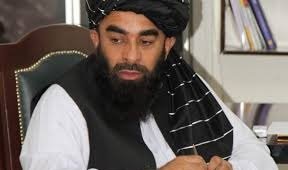
The Taliban urged the West to overlook its treatment of Afghan women and to begin cooperation. On June 30, 2024, representatives of the Taliban called on the West to overlook the measures they have imposed on Afghan women and girls in order to improve international relations. Taliban spokesman Zabihullah Mujahid stated on the opening day […]
The Taliban urged the West to overlook its treatment of Afghan women and to begin cooperation.
On June 30, 2024, representatives of the Taliban called on the West to overlook the measures they have imposed on Afghan women and girls in order to improve international relations. Taliban spokesman Zabihullah Mujahid stated on the opening day of the meeting in Qatar under the auspices of the UN that the Taliban supports certain religious and cultural values and societal aspirations that “must be recognized to promote relations, not to confront disputes,” reports Apnews.
The two-day meeting in Qatar began on June 30 and aims to expand engagement with Afghanistan and to coordinate responses to the country’s issues more effectively.
Mujahid also stated that political understanding between the Taliban and other countries is steadily improving. In particular, he noted that Kazakhstan has removed the Taliban from its list of banned groups, and Russia will take similar measures in the near future.
According to him, “such disagreements should not escalate to the point where powerful countries use their leverage to exert pressure in the areas of security, politics, and economics.” He did not mention the harsh decrees regarding women and girls that have caused global outrage. Previously, Mujahid referred to criticism of the treatment of Afghan women and girls as “interference in internal affairs.”
This is already the third round of negotiations in Doha in this format – the previous ones took place in May 2023 and February 2024. Unlike those, representatives of the Taliban are participating in the current meeting. The Taliban were not invited to the 2023 conference, and in February 2024, they declined to participate themselves, having previously demanded that Afghan human rights defenders who criticize them not be present at the meeting, and that UN Secretary-General António Guterres meet with them, which the organizers did not agree to.
The Taliban confirmed their participation in the current consultations in mid-June. Zabihullah Mujahid stated that after reviewing the agenda, the country’s leadership decided that the meeting serves the interests of the country. The Taliban also demanded that no Afghan woman be allowed to attend the meeting prior to this event. The UN confirmed that there would be no women at the meeting in Doha, except for UN representatives.
This decision has drawn criticism from human rights groups, UN Special Rapporteur on Human Rights in Afghanistan Richard Bennett, and Nobel laureate Malala Yousafzai.
Yousafzai wrote on social media platform X that she is “worried and disappointed” that the “Taliban” were invited to a meeting with UN special envoys while Afghan women and human rights defenders were excluded from the main discussion. Holding the meeting without the participation of Afghan women sends a “completely wrong” signal that the world is ready to meet the demands of the “Taliban,” she noted. She added that the actions of the “Taliban” in Afghanistan are tantamount to gender apartheid.
Human Rights Watch (HRW) stated that by holding the meeting on the Taliban’s terms, the UN has reached a “new low.” “Those who have suffered the most from the abuses of the ‘Taliban’ are being pushed aside and excluded from discussions about their fate at the UN,” the statement said. It pointed out that this decision contradicts Resolution 1325 of the UN Security Council, adopted in 2000, which guarantees women’s participation in key international discussions.
The UN disagreed with HRW’s criticism, stating that special envoys will still meet with groups advocating for women’s rights.
On July 2 in Doha, special envoys (the organizers invited diplomats from 30 countries, most of whom confirmed their participation, including Russia and the USA) will meet with representatives of Afghan civil society. “Under no circumstances should any of the meetings between the organization representatives and envoys be seen as official recognition of the ‘Taliban’ as a government or its legitimization,” the UN emphasizes. “We must meet with them to address the issues of Afghanistan. It is better for all special envoys on Afghanistan to be in one room, listening to the same thing, communicating with the de facto authorities, and broadcasting the same message so that everyone is on the same page.”