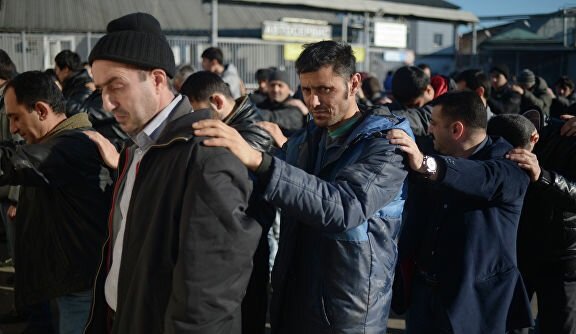
Due to the tightening of checks on foreigners in Russia, many migrants from Central Asia are afraid to visit public places, including dining establishments. Owners of some cafes and canteens reported that the current situation has affected their business. The names of the report’s heroes have been changed for their safety. After the terrorist attack at the “Krokus City Hall” in the Moscow region, inspections of cafes, canteens, and fast food outlets frequently visited by migrants have increased. Some dining establishments have been forced to suspend operations due to frequent inspections. The exact number of such closed establishments is unknown.
Sardar, a migrant from Uzbekistan, said that many cafes and canteens are currently closed due to frequent police checks. “I don’t know about other cities, but in Moscow, 75% of cafes and fast food places are closed,” he noted. Sardar owns a small cafe in Moscow. He has also decided to temporarily stop working. Most of his cafe’s visitors were from Central Asia. According to Sardar, after the attack at “Krokus,” pressure on migrants has increased, and recently there have been almost no visitors to his cafe. “Imagine that out of 100 visitors, only 50 came. The food was left over, and we had to throw it away. The next day, only 25 people came instead of 50. Thus, we realized that we needed to suspend operations,” Sardar said.
Migrants from other countries confirm that against the backdrop of rising xenophobic sentiments and intensified police checks in Russia, one of the affected sectors is the food service industry. A migrant named Azamat said that now everyone is being checked for documents on the street and in the metro. “Most often, Uzbeks and Tajiks are detained. I also faced xenophobia: I went into a store to buy water, and the seller—a Russian woman—refused to serve me. She said, ‘You are all terrorists,'” said the interviewee.