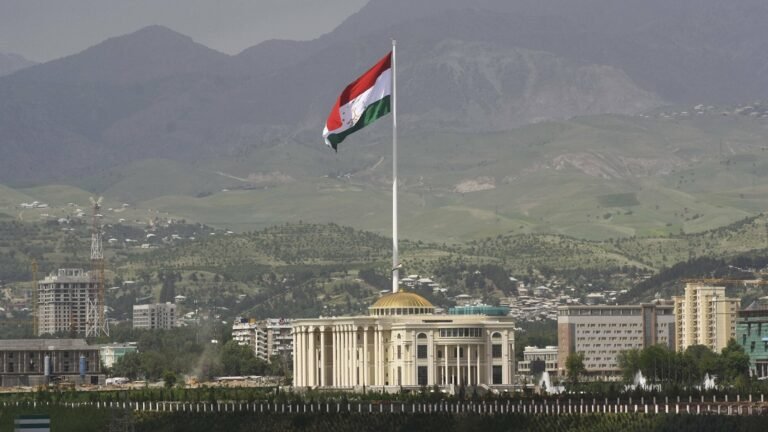
This year, the country is celebrating the 33rd anniversary of state independence. Every year during the Independence Day celebrations, the country’s officials speak of “huge achievements” and refer to each year of independence under the leadership of Emomali Rahmon as “the most fruitful year,” full of “unique accomplishments.”
From the president himself to a simple school teacher, everyone unanimously claims that every hour and every second of the last 33 years exists “thanks to” Emomali Rahmon. They always cite examples from the civil war, asserting that if it weren’t for Rahmon, our people would not have peace. But today, no one asks, where has this peace gone? Representatives of the opposition, with whom you made peace, why are some killed while others are imprisoned? What happened to peace?
Independence and the “World Stage”
The government of the country claims that over these 33 years, our Tajikistan has achieved significant success on the world stage, which surprises the world. Of course, if we understand the word “peace” well, we might be able to comprehend these claims of the authorities. For example, can we not call a large and numerous kinship clan, consisting of many sons and daughters, brothers and sisters, uncles and aunts, sons-in-law and daughters-in-law, grandchildren and great-grandchildren, “the whole world”?
In the 32 years of Emomali Rahmon’s rule, the Tajik government has managed to achieve great accomplishments on this world stage. Who said that the IRS company – one of the largest companies controlling the paid highway from Dushanbe to Khujand, owned by Emomali’s son-in-law – is not an achievement? Don’t we know that this company reports to no one but the head of this “world”? It collects tribute from the residents of the outside world as best it can. This is one of the greatest achievements of the Independence era for this world.
We can list hundreds of large companies, offices, and enterprises that belong to this world and are annually exempted from state fees and taxes. Is this not considered a great achievement of this “world” in the history of Independence, as it was designed to ensure the economic well-being and security of its residents?
One of the unique achievements that this “world” has had in recent years is that it has actually managed to present the Tajik people to the real world as terrorists. Don’t you know that today Turkey no longer issues us visas, and the United Arab Emirates also does not want to issue visas to Tajiks? It is known that Russia is also preparing some trouble for Tajik migrants. There are no jobs in the country, and poor citizens do not know where to go or how to find a piece of bread. Is this not an achievement?
The Latest Discovery of the Independence Era
Perhaps most residents are not well aware of the achievements of the independence era. One of the greatest achievements of this era under the leadership of Emomali Rahmon is the invention and introduction of new terminologies or labels.
To demonstrate Emomali Rahmon’s contribution to the progress and prosperity of the country, the government of Tajikistan has devised special labels to brand critics – these are “traitor” and “terrorist.” Currently, thousands of citizens have been imprisoned without any guilt on these two charges.
These two words are among the terminologies that have emerged in our country during the era of independence, and the meanings of these two words cannot be found in the definitions of standard explanatory dictionaries. From the perspective of Tajik authorities, they hold special significance. For example, if we look in explanatory dictionaries, the meaning of the word “traitor” refers to a person who “sold the interests of the nation and state to the enemy” and committed similar treacherous acts. However, I do not believe that those imprisoned or killed in Tajikistan on this charge sold national interests or parts of the country’s territory to outsiders, including China. However, these labels are always used to brand ordinary free-thinking and knowledgeable segments of society.
For instance, if today a free-thinking citizen wants to ask the head of the government, Emomali Rahmon, why the main problems, including the lack of electricity, labor migration, and economic issues remain unresolved? Or why education and science, production, and industry have not developed over these 33 years of his rule, he will surely be branded with these two words, sentenced, and soon find himself behind bars.
Of course, when Emomali Rahmon managed to maintain his power and remove his opponents from the political scene – this is a success for a dictator. A dictator always employs the rule of the “scapegoat.” For example, if he cannot accomplish something and becomes incompetent, he blames others for incompetence. And certainly, to distract the attention of the residents and portray himself as a hero and a serious person, he will dismiss a minister or a chairman, or label someone a “traitor” and “terrorist” and send him to prison, thus making others the “scapegoat.” Unfortunately, he succeeds in this.
Intellectual Layers of Society
In Tajikistan, dozens of universities, institutes, and academies of sciences and research institutions operate, employing thousands of scientists, great scholars, and professors. In these scientific institutions work individuals who are well aware of the direction of Tajik government’s policies. In addition to these scientific centers, we also have thousands of Islamic scholars and knowledgeable individuals who monitor the country’s politics and are well aware of the harm that the silence of this segment of the population has brought to the nation.
This segment of society, which is actually very influential, knows better than anyone how the Tajik people turned a collective farm chairman into a full-fledged dictator, yet none of them hindered this process. And they may know how significant the contribution of these very scholars has been in creating a dictator over 33 years of independence.
It can be said that the contribution of the country’s intelligentsia to the creation of a dictator is greater than that of government members and sycophants. We have witnessed how thousands of poorly educated young people bravely spoke out against the tyranny of Emomali Rahmon and raised their voices. However, it should be acknowledged that many scholars, academics, and representatives of the intelligentsia did not dare to stand alongside the poorly educated migrants.
When the political ethics and its laws were violated by the government of the country, representatives of the intelligentsia, especially doctors of political science and journalism professors, not only remained silent but, knowing that the truth was not on their side, confirmed it. Hundreds of political scientists, philosophers, and scholars from various fields were 100 percent aware that their silence was harmful to the state and the nation, but out of fear, they preferred silence.
Therefore, two faculties should be closed in the country’s universities: the faculty of journalism and the faculty of political science. Since these two fields in Tajikistan today cannot function properly, cannot express the truth, they are no longer needed.
And in conclusion…
Years later, history will judge our actions. Future generations will know who concealed the truth and who wanted to reveal it. Future generations will understand what the representatives of the intelligentsia, politicians, and migrants wanted to say.
There is a well-known saying that goes: “A dictator rules for many years and believes that he has been very just, but history will surely curse him.”
To consider all the achievements of a great, historically civilized nation as the achievements of one person, to proclaim him the “leader of modernity” and an “all-knowing scholar,” while disregarding the efforts of others, means “to make an elephant, that is, the great sons of this people, into a fly,” and from a fly, that is, the “leader of the nation,” into an elephant. This is an unforgivable mistake for our people.
Makhmadali Yusuf, specially for Azda Tv