News
ECONOMY TAJIKISTAN
The cost of rare metals in Tajikistan and their impact on the sphere of influence in the region
Tajikistan cannot boast of large reserves of oil and gas, which many countries rely on for development and prosperity. However, today, in the context of rapid digital technology development and the transition to a green economy, the demand for petroleum products is decreasing, giving way to rare metals, which may herald a golden period for […]
Tajikistan cannot boast of large reserves of oil and gas, which many countries rely on for development and prosperity. However, today, in the context of rapid digital technology development and the transition to a green economy, the demand for petroleum products is decreasing, giving way to rare metals, which may herald a golden period for our country. This is because the republic has significant reserves of non-ferrous metals and other rare elements, the demand for which will only increase globally each year.
The gradual depletion of oil and gas reserves worldwide, along with the harmful impact of petroleum products on the environment, is prompting countries to transition to alternative, renewable, and environmentally friendly energy sources. The development of technologies in this direction largely depends on rare earth elements (REE), the reserves of which are limited globally, while the demand is expected to grow each year. Additionally, the rapid advancement of digital technologies and the electronics industry also requires the extraction of large volumes of rare earth metals and other elements.
According to Asia-Plus, experts refer to REE as the “vitamins of the modern economy,” the importance of which has led to a global race for their exploration, extraction, and export. Given that Tajikistan possesses significant reserves of rare earth elements, there are ample grounds to believe that it is time for our republic to make a breakthrough in its development.
What resources does Tajikistan have?
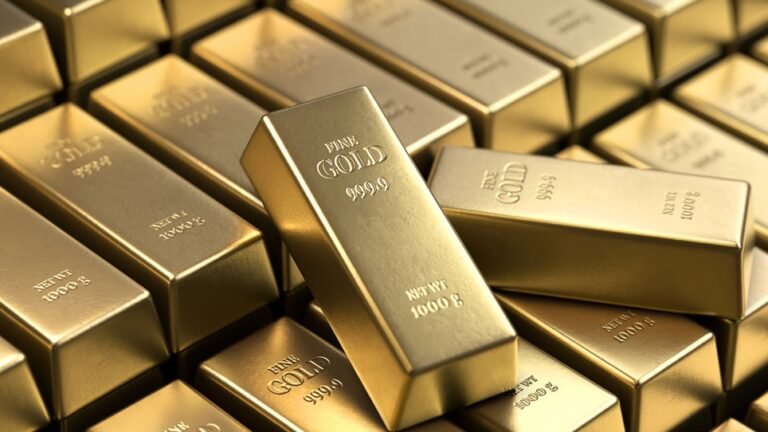
Tajikistan is a country with substantial mineral resources in the Central Asian region. According to the Main Geological Directorate, over 700 deposits of valuable natural elements have been discovered within our republic. There are 4 gold-bearing belts and 18 promising areas identified in Tajikistan. A total of 28 gold deposits have been accounted for.
Iron ores are known in northern Tajikistan, on the southern slopes of the Kuramin Range. Large deposits of polymetallic ores have been explored, localized in northern and central Tajikistan. The main deposits have been identified in the mountain massifs of Karamazar and Altyn-Topkan in the southwestern Tian Shan, not far from the border with Uzbekistan. Confirmed lead reserves are estimated at 1.8 million tons, zinc at 4.66 million tons. Silver reserves amount to 44 thousand tons, placing Tajikistan fifth in the world for this indicator. Tajikistan ranks among the leaders in the post-Soviet space for antimony and mercury ore reserves.
Considering the current global trend of increasing demand for rare earth elements, Tajikistan has begun to pay serious attention to the development of its mining industry. In the upcoming presidential address at the end of December 2023, along with other sectors, the metallurgy and mining industries were thoroughly analyzed.
In particular, Emomali Rahmon set the following task regarding this issue: “The government of the country is tasked with paying special attention to the extraction and processing of non-ferrous metals, including lithium, tungsten, nickel, antimony, and others, as well as developing and implementing a program for the development and processing of metals within the country into finished products.”
During his visit to the Gorno-Badakhshan Autonomous Region in August 2023, the President of Tajikistan, Emomali Rahmon, spoke in favor of expanding the extraction and processing of mineral resources, including one of the rarest minerals – lithium, in the Darvaz district.
Lithium has recently been referred to as “white oil.” Interest in it arose when the demand for this metal increased against the backdrop of the development of electric vehicle production, and its price on global markets skyrocketed.
According to the International Energy Agency (IEA), there were 2 million electric vehicles in the world last year. By 2040, their number is expected to reach at least 40 million, predicts the IEA. It is anticipated that the demand for lithium will increase from 700,000 tons in 2022 to 2.5 million tons by 2030.
Earlier, the head of the Main Geology Department, Ilkhom Oymukhammadzoda, stated that Tajik specialists are working not only on finding lithium deposits but also other rare earth minerals. According to him, exploration of lithium-rich areas in the southern part of Pamir, where there are many resources, is currently underway.
Despite the presence of rich deposits of rare earth elements in the republic, their extraction is complicated due to the difficult terrain. Significant funding is required. For these and other reasons, until recently, only Chinese investors showed interest in Tajikistan’s mineral resources, primarily in gold extraction. However, the situation has recently begun to change dramatically. Other global powers have started to show increased interest in Central Asia and its natural wealth.
In April of this year, during a tour of five Central Asian countries, the UK Foreign Secretary David Cameron visited Tajikistan. The purpose of the trip is to implement a new British strategy for engagement with former Soviet republics in the “C5+1” format to reduce the influence of Russia and China.
In the competition for Central Asia, London is betting on promising investment projects and soft power. This visit to Tajikistan is seen as a foundation for new relations that will strengthen cooperation in key areas such as trade and investment, social policy, science, and education.
A promising direction should be the joint extraction and processing of mineral resources, which Tajikistan is rich in. This was the first visit in history by a head of British diplomacy to Tajikistan. Announcing the goals of the tour, David Cameron emphasized that the Central Asian countries neighboring Russia and China are a crucial region in the world, and therefore it is time for the UK to actively engage in the race for influence in Central Asia.
The decision to pivot towards Central Asia was made in London at the end of last year when the report “Countries at a Crossroads: The UK’s Engagement in Central Asia” was presented to the Foreign Affairs Committee of the House of Commons. Analyzing the state of relations between London and the Central Asian states, the authors of the new British strategy concluded that the previous policy had proven ineffective.
The hallmark of the changes, as understood in London, was the visit to Tajikistan by David Cameron, which opened his tour, and his negotiations with President Emomali Rahmon. Cameron urged Central Asian states to largely start their relationships from scratch. Meanwhile, against the backdrop of London’s activity, which has entered the race for spheres of influence in the strategic interests of Russia and China, Japan announced its growing ambitions in Central Asia. The country’s government announced plans to hold a summit this summer with the five countries of the region.
Interest in the resources of Central Asia is also growing among the United States.
In January of this year, experts from the Washington-based Atlantic Council and authors of the report “Utilizing Rare Earth Elements in Central Asia for Economic Growth” from the U.S. International Tax and Investment Center discussed how the reserves of rare earth elements (REE) in Central Asian countries could become one of the decisive factors for stimulating global economic growth. According to American experts, Kazakhstan “is already producing rare earth elements” through the state holding company Kazatomprom. Uzbekistan has established a Center for the Study of Rare Earth Metals at the Almalyk Mining and Metallurgical Complex.
Other countries, such as Tajikistan and Turkmenistan, according to researchers, “lack transparency in attracting international partners,” but there are also “studies underway in the development of REE deposits.” In this regard, the report voiced the idea of creating a Central Asian Center for the Study of Rare Earth Elements and researching potential clients, investors, and partners for REE in Central Asia. This Center “is needed primarily by the countries of the region,” experts believe.
The U.S. considers the region attractive also in terms of competition with other global leaders – China and Russia. John Herbst, senior director of the Eurasian Center at the Atlantic Council, points out that it is in Central Asia that the U.S. “may have a unique opportunity” to geopolitically counter China and Russia if pro-American policies can be pursued in the region. Experts consider it important to involve several countries in the development of the mining industry in the region, including in Tajikistan.
“Competition is needed; we cannot allow investments and large loans to come only from one country. Western investments in the exploration and extraction of rare earth elements in Central Asian countries are a crucial opportunity not only to establish global supply chains but also to support regional integration, sovereignty, and economic freedom in these states,” says Tajik political scientist Asad Bekhruz. “Essentially, this is about shifting competition in the 21st century from the extraction of oil, gas, and other hydrocarbons to the global struggle for rare earth elements.
Investments in the development of rare earth element extraction will help accelerate economic growth in Central Asia while simultaneously creating an important market for the production of components necessary for the transition to green energy. The main thing is that the rivalry of major countries in the region does not escalate into conflict but instead benefits everyone.”