News
CENTRAL ASIA HUMAN RIGHTS
The European Parliament adopted a resolution on Central Asian countries
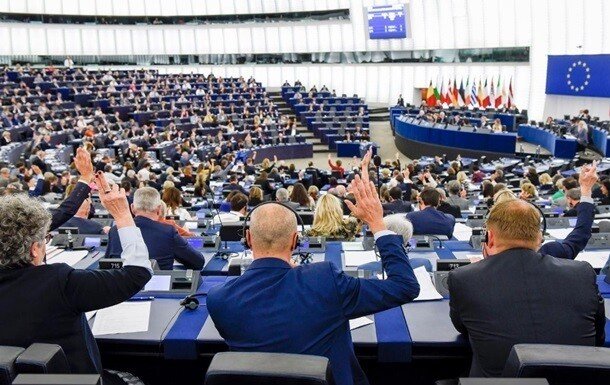
The European Parliament, the highest legislative and representative body of the European Union, has adopted a resolution regarding the countries of Central Asia. In the resolution, adopted by a majority of votes, the European Parliament called on the countries of the region to adhere to international obligations, release all political prisoners, and continue to develop […]
The European Parliament, the highest legislative and representative body of the European Union, has adopted a resolution regarding the countries of Central Asia.
In the resolution, adopted by a majority of votes, the European Parliament called on the countries of the region to adhere to international obligations, release all political prisoners, and continue to develop cooperation with the European Union.
A total of 543 Members of the European Parliament voted in favor of the resolution “Report on the Assessment of the EU Strategy for Central Asia,” while 42 voted against and 44 abstained. In total, 629 Members of the European Parliament participated in the vote.
The authors of the resolution expressed concern over the “mass impunity” for human rights violations in the countries of the region and called for independent investigations into reports of torture and other human rights abuses.
Additionally, the document expresses concern over the increasing number of arrests of journalists and bloggers on charges of “extremism,” “spreading knowingly false information,” and “inciting hatred and hostility.”
EU lawmakers also urged the leaders of Central Asian countries to release all “political prisoners,” including Faromuz Irgashev, Ulfatkhonim Mamadshoeva, Khursand Mamadshoev, and Khushruz Jumayev.
The resolution notes that EU missions in Central Asian countries should actively monitor the situation on the ground, participate in court proceedings, cooperate with human rights defenders, respond to human rights violations and politically motivated persecutions, and meet with political prisoners.
The document also mentions cooperation between Central Asia and the European Union, including trade and economic relations, anti-Russian sanctions, the issue of migrants, and more.
Earlier, on November 28, 2023, the Committee on Foreign Affairs of the European Parliament had already voted in favor of a draft resolution of this resolution, which also proposes to review the EU strategy for Central Asia “with the aim of updating it” in light of geopolitical shifts in the region.
The last time the EU adopted a new strategy for Central Asia was in June 2019.
The draft resolution notes that since the adoption of the strategy, the region has been influenced by “significant external factors, such as Russia’s illegal aggressive war against Ukraine, the Taliban’s takeover of Afghanistan, China’s global ambitions, as well as internal instability.”
The document lists the Bloody January 2022 events in Kazakhstan, detentions and repressions following protests in the Gorno-Badakhshan Autonomous Region of Tajikistan in November 2021 and May 2022, and in the Autonomous Republic of Karakalpakstan within Uzbekistan in July 2022, as well as clashes on the Kyrgyz-Tajik border.
The countries of Central Asia declare themselves as democratic, secular, rule-of-law states and assert that there are no political prisoners in these countries. However, according to the Freedom House report on the state of freedom in the world for 2023, all five Central Asian states are rated as countries with low and declining levels of democracy and are classified as authoritarian regimes.