News
MIGRATION
The Ministry of Internal Affairs of Russia proposed new rules for migrants
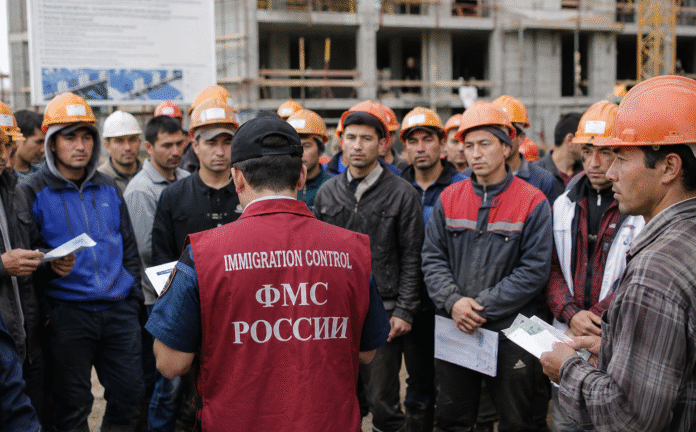
The Russian government intends to attract up to two million labor migrants and implement a new system for hiring foreigners. The Ministry of Internal Affairs of Russia has proposed a package of bills for the organized hiring of foreign workers from 2027 to 2030. This involves amendments to the Labor, Tax, and Budget Codes of […]
The Russian government intends to attract up to two million labor migrants and implement a new system for hiring foreigners.
The Ministry of Internal Affairs of Russia has proposed a package of bills for the organized hiring of foreign workers from 2027 to 2030. This involves amendments to the Labor, Tax, and Budget Codes of the country.
A pilot project for organized recruitment has been prepared as part of the new Concept of State Migration Policy of the Russian Federation for 2026–2030. The main goal of this project is to meet the demand of the Russian economy for labor, primarily in sectors experiencing a severe shortage of personnel.
As part of the experiment on organized recruitment of foreign workers, more than 1.7 million foreigners are expected to arrive in Russia by 2030. Approximately 1.2 million of them will be citizens of Central Asian countries. The organized recruitment of employees is expected to bring 13.6 billion rubles to the country’s budget.
Additionally, as part of this project, an electronic system will replace paper work permits. By the end of 2026, the Ministry of Internal Affairs of Russia will launch a new information system. All information about the employer and the employee will be included in this system.
Under the new system, employers will need to submit applications, after which the Ministry of Internal Affairs will select candidates for them. Companies will be required to provide housing and medical assistance for foreigners.
Foreign workers will need to undergo a series of mandatory procedures, including registration, medical examinations, obtaining a three-year identification card, and mandatory state genomic registration. Medical examinations will only be conducted in state-approved medical institutions.
As part of the experiment, it is proposed to conclude only fixed-term labor contracts with migrants.
A special tax system is also being introduced, under which foreign workers will pay a fixed advance payment as personal income tax (PIT) of 1,200 rubles per month. All these tax revenues are planned to be directed to regional budgets.
The Ministry of Internal Affairs also proposes to introduce state duties for entering information into electronic registers to cover the administrative costs of the project.
The explanatory note to the bill states that it is planned to create migration hubs for the initial temporary stay of foreign citizens. Procedures necessary for working in Russia under organized recruitment will be conducted there, after which migrants are expected to be distributed across Russian regions to employers.
The new rules are being introduced against the backdrop of a statement by the Minister of Economic Development of Russia, Maxim Reshetnikov, that ensuring economic growth in Russia without attracting and retaining migrants in the country “will be difficult.”
The President of Russia, Vladimir Putin, has also stated that the country is interested in attracting “necessary labor force.”
At the same time, despite the shortage of labor, there is a rise in xenophobia and anti-migration sentiment in Russia. Against this backdrop, a number of bills have been proposed and adopted in the State Duma to tighten control over migrants. Tajik migrants also often complain about raids, inspections, and the harsh treatment by law enforcement officials.