News
POLITICS
The Prosecutor General’s Office discussed the illegal use of electricity
The Attorney General of Tajikistan, Habibullo Vohidzoda, stated that it is necessary to prevent the illegal use and excessive losses of electricity. On May 6, 2025, a meeting of the Council for the Coordination of Law Enforcement Agencies of the Republic of Tajikistan was held at the General Prosecutor’s Office of the Republic of Tajikistan. […]
The Attorney General of Tajikistan, Habibullo Vohidzoda, stated that it is necessary to prevent the illegal use and excessive losses of electricity.
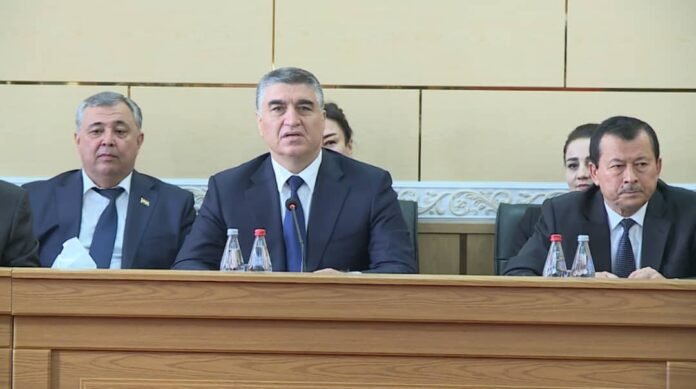
On May 6, 2025, a meeting of the Council for the Coordination of Law Enforcement Agencies of the Republic of Tajikistan was held at the General Prosecutor’s Office of the Republic of Tajikistan.
The meeting was attended by the heads of law enforcement agencies, including the head of the Main Department for the Execution of Criminal Sentences of the Ministry of Justice, Mansurjon Umarov, the chairman of the State National Security Committee, Saymumin Yatimov, Attorney General Habibullo Vohidzoda, and heads of other agencies.
The Attorney General emphasized that one of the main factors for the development of the social and economic spheres of the country, as well as ensuring a decent life for people, is the provision of uninterrupted electricity supply to the population.
In this regard, council members and other responsible officials were instructed to convey to the public the essence and provisions of the new legislation regarding the severity of criminal liability for the illegal use of electricity.
During the council meeting, the progress of the implementation of the instructions and directives of Emomali Rahmon “to prevent the illegal use of electricity, excessive losses, and other shortcomings in this area” was discussed.
The Attorney General also proposed to direct the forces and capabilities of law enforcement agencies and other authorized bodies to implement these directives from the country’s president.
Earlier, on March 27, during an extended meeting of the government of Tajikistan with the participation of ministers and heads of agencies, President Emomali Rahmon expressed concern about the “inefficient use of electricity and its excessive losses during the autumn-winter period of 2024-2025” and proposed to introduce criminal liability for “illegal use of electricity” and “non-payment for it.”
Less than 10 days later, the Ministry of Justice prepared amendments to the draft law “On Amendments to the Criminal Code” and the draft law “On Amendments to the Code of Administrative Offenses,” which were presented to the deputies by Minister of Justice Muzaffar Ashuriyon.
The amendments to the criminal and administrative codes were adopted by the deputies of the Majlisi Namoyandagon (lower house of parliament) on April 2.
According to the new law, individuals violating the rules for the use of electricity face fines ranging from 27,000 to 90,000 somoni or imprisonment for a term of 3 to 10 years.
After the amendments to the law were adopted, reports began to emerge about citizens being held accountable for the illegal use of electricity.
According to residents, law enforcement officers are conducting apartment and house visits, carrying out raids and inspections.
The news about the adoption of this law comes against the backdrop of numerous restrictions on electricity supply in Tajikistan. In particular, consumers using more than 10,000 kilowatt-hours per month are charged electricity rates for commercial enterprises. To date, authorities have registered 250 such consumers.
Additionally, according to a new government decree, starting from April 1, 2025, the cost of electricity has increased. Residents will now pay 35.36 dirams per kilowatt-hour instead of the previous 30.37 dirams.
All of this is happening while the country’s population suffers from a lack of electricity, and it remains unclear what measures the president and responsible officials are taking to address these issues.
According to informed sources, those who most often do not pay for electricity are state enterprises and companies owned by relatives of high-ranking officials. Many of these companies purchase electricity at lower prices than ordinary citizens.