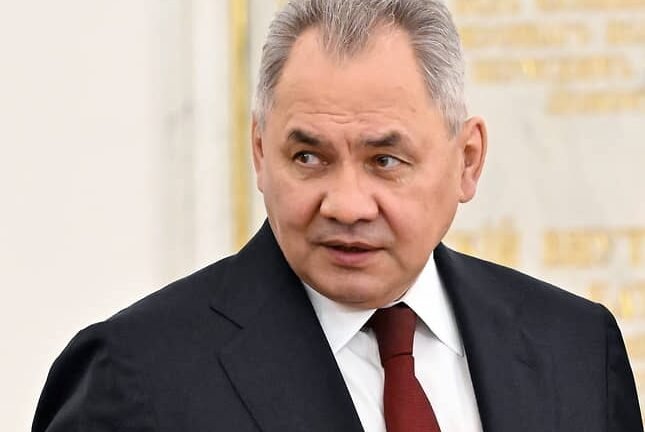
Russian Defense Minister Sergey Shoigu, speaking at a meeting of the Ministry of Defense of Russia, stated that public organizations (NGOs) in Central Asia have “significantly increased their anti-Russian activities.” He emphasized the complexity of the situation in Central Asia not only due to threats from the Taliban in Afghanistan and the terrorist group “Islamic State,” but also from non-governmental organizations, as “these NGOs have significantly increased their anti-Russian activities aimed at reducing military-technical, economic, and cultural cooperation of Central Asian states with the Russian Federation.” He advocated for the adoption of “preventive measures.”
According to one expert from Kazakhstan, there are over 100 large pro-Western non-governmental organizations operating in the Central Asian region, with more than 18,000 representations and branches, which are “an important part of society,” supported by the Central Asian states. The organizations mentioned by the Russian Defense Minister are not working against Russia, but rather for the protection of human rights in their countries. As the Russian Federation increasingly violates human rights, it finds itself in the spotlight of human rights organizations; the level of repression against human rights defenders and journalists in Russia is extremely high and unacceptable according to international human rights standards.
Journalists and political scientists in Central Asian countries believe that the “preventive measures” mentioned by Shoigu may involve increased pressure from the Kremlin on the leaders of Central Asian states to adopt repressive laws similar to the Russian law on “Foreign Agents,” and another attempt by the Russian Federation to strengthen its influence in the region by any means.