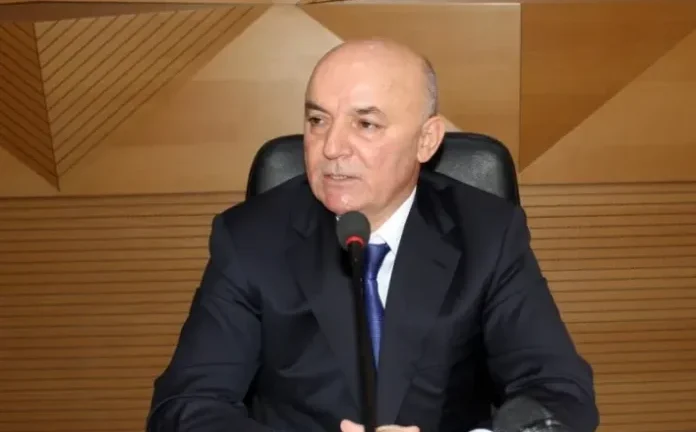
Nusratullo Mukim Davlatzoda, who has held the position of Chairman of the Tax Committee of Tajikistan since 2009, announced at a press conference on July 22 that the tax collection plan for the first half of this year was fulfilled by 123%. The Tax Committee has frequently reported significant over-fulfillment of plans in recent years.
The head of the Tax Committee stated that during this period, 17 billion somoni in taxes were collected, which exceeds the planned amount by 2.3 billion somoni. According to him, the tax collection plan has not yet been fully met in all regions of the republic.
At the same time, Davlatzoda noted that the tax debt across the country has increased and reached 1.4 billion somoni, which is 351 million somoni more compared to the beginning of the year. According to the head of the Tax Committee, one of the reasons for the growth in tax debt is that in 2025, economic entities had higher incomes compared to 2024. He also reported that the tax debt of taxpayers has increased due to fines and penalties imposed by the Tax Committee. He stated that fines alone amounted to 113 million somoni.