News
WORLD
The USA has started a war. How will it end?
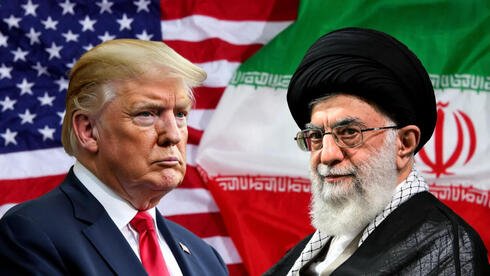
The Supreme Leader of the Islamic Revolution of Iran was killed as a result of a joint missile strike by the USA and Israel on his residence. Ayatollah Seyed Ali Khamenei, the 86-year-old leader of Iran, was killed along with his son, daughter, son-in-law, grandson, and daughter-in-law. His death was first reported on March 1 […]
The Supreme Leader of the Islamic Revolution of Iran was killed as a result of a joint missile strike by the USA and Israel on his residence.
Ayatollah Seyed Ali Khamenei, the 86-year-old leader of Iran, was killed along with his son, daughter, son-in-law, grandson, and daughter-in-law. His death was first reported on March 1 by Reuters, citing a high-ranking Israeli source. Shortly thereafter, the information was confirmed by Iranian officials.
This occurred against the backdrop of statements that the latest round of indirect negotiations between the USA and Iran regarding the resumption of dialogue between Tehran and Washington, as well as Western countries on Iran’s nuclear program, had concluded positively.
However, on February 28, American missiles struck various regions of Iran, including Tehran. The joint operation by the USA and Israel was referred to by different names: Washington called it “Epic Fury,” while Israel referred to it as “Roaring Lion.”
On the first day of the attacks, it was announced that there were 201 dead and 747 injured. Among the high-ranking Iranian military and officials killed in the strike were the Chairman of the Defense Council Ali Shamkhani, the Commander of the Ground Forces of the Army Abdulrahim Mousavi, the Minister of Defense and Logistics Aziz Nasirzadeh, and the Commander of the Islamic Revolutionary Guard Corps Mohammad Pakpour.
On Saturday, following the start of the strikes by the USA and Israel, Tehran began retaliatory missile attacks on US and Western military bases in the Middle East, as well as on Israeli territory. According to the Telegram channel “Belarusian Silovik,” over the past 24 hours, Iran has struck targets in 15 countries in the region, including Israel, the United Arab Emirates, Saudi Arabia, Qatar, Kuwait, Jordan, Iraq, Bahrain, Oman, Syria, and Cyprus. It was reported that an Italian military base in Kuwait was attacked, a French base in the UAE, and a British base in Cyprus.
On the same day, US President Donald Trump urged the Islamic Revolutionary Guard Corps to lay down their arms and surrender. According to him, this is the only path to mercy; otherwise, they face destruction. A representative of the Iranian Armed Forces Central Command, Ibrahim Zulfiqari, responded with a statement: “Trump is a player; you managed to start this war, but we will finish it.”
The exchange of missile strikes continues, while analytical circles discuss the possible underreporting of losses by the USA and Israel. The US Central Command reported on Sunday morning that three servicemen were killed and five were injured as a result of Iranian attacks on American bases. A brief statement emphasized that “the situation remains dynamic, and out of respect for the families, details are not disclosed.”
Iranian Foreign Minister Abbas Araghchi, confirming the announcement of a forty-day mourning period following Khamenei’s death, stated in an interview with Al Jazeera that a new Supreme Leader could be elected within one or two days. He noted that the relevant procedures have already been initiated and a transitional council has been established.
According to Article 111 of the Constitution of the Islamic Republic of Iran, until a new leader is elected, his powers are temporarily exercised by a council of three members. This includes President Masoud Pezeshkian, head of the judiciary Gholamhossein Mohseni Ejei, and Shia theologian and member of the Guardian Council of the Constitution Alireza Araafi. So far, two meetings of this body have taken place.
The elections for the Supreme Leader are conducted by the Assembly of Experts — a body of 88 clerics elected every eight years. According to the law, candidates must be considered on a competitive basis and approved by the Guardian Council of the Constitution. Currently, the media mentions possible candidates including Mojtaba Khamenei, Alireza Araafi, Mohammad Mahdi Mirbagheri, Gholamhossein Mohseni Ejei, and Hassan Khomeini.
It should be noted that the first election of the leader of the Islamic Revolution took place in 1979, when Ruhollah Khomeini took this position. The second election was held in 1989, resulting in Ali Khamenei being elected as the Supreme Leader.