News
TAJIKISTAN WORLD
Tourist from Iran spoke about her detention in Tajikistan
Last year, a tourist from Iran, Nozanin Mutei, was detained in Tajikistan. She was found to have 6 dried poppy flowers. The court sentenced her to 5 years and 2 months in prison, but after 9 months, Emomali Rahmon pardoned her. In an interview with Iranian media, the tourist detailed her adventures in Tajikistan, including […]
Last year, a tourist from Iran, Nozanin Mutei, was detained in Tajikistan. She was found to have 6 dried poppy flowers. The court sentenced her to 5 years and 2 months in prison, but after 9 months, Emomali Rahmon pardoned her.
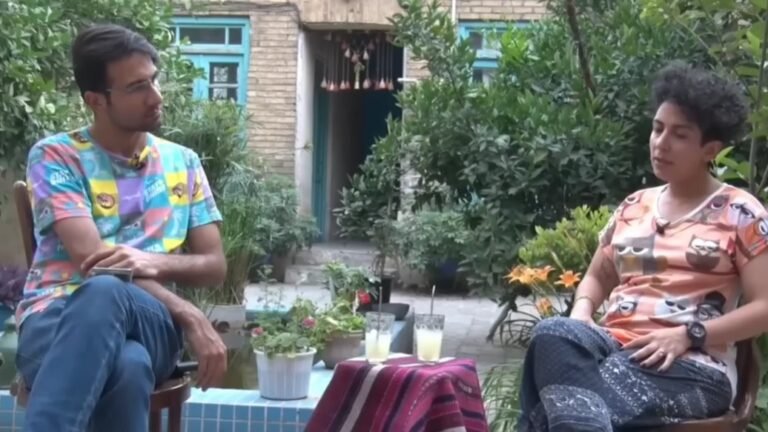
In an interview with Iranian media, the tourist detailed her adventures in Tajikistan, including how law enforcement officers demanded bribes and treated her harshly.
According to her, she started her tourist route in Pakistan, then headed to Afghanistan. From there, she planned to go through Tajikistan to Uzbekistan, then to Turkmenistan, and finally back home to Iran.
However, upon entering Tajikistan at the border checkpoint, she was detained by law enforcement officers because she had 6 dried poppy flowers with her. A criminal case was opened against her on charges of drug trafficking. Nozanin Mutei stated that poppy flowers are not illegal in any country, and she did not know that they were illegal in Tajikistan. She said that she was held in a pre-trial detention center in the city of Bokhtar (formerly Kurgan-Tyube) for 6 months. After that, the court sentenced her to 5 years and 2 months in prison.
The tourist reported that all detainees are held together in the pre-trial detention center in Bokhtar, without being separated by the categories of crimes, so those accused of murder, theft, and drug trafficking are kept in the same place.
According to the tourist, sanitary norms and rules were not observed in the pre-trial detention center in Bokhtar; it was dirty, and the windows did not have glass, so “it was very cold in winter and hot in summer.”
“Usually, we took a shower once a week; however, in winter, under the pretext of power outages and lack of hot water, we could not take a shower for three weeks,” Nozanin reported.
The Iranian tourist emphasized that Tajikistan is not only economically backward but “even in cultural terms, the country is considered backward.” Because of this, corruption is widespread in the country, she says.
“I only later learned that there was a possibility to resolve the issue immediately when I was detained by paying 50 or 100 dollars,” Nozanin Mutei stated.
According to the tourist, when the case had already progressed significantly, she was demanded $20,000 through her lawyer for her release. However, she said she did not want to pay $20,000 for 6 poppy flowers and wanted to resolve the issue legally. But the situation worsened even more.
Finally, the newly appointed Iranian ambassador to Tajikistan, Mohammad Taqi Sobiri, informed President Emomali Rahmon about Nozanin’s case, emphasizing that it is unacceptable to imprison a person for 6 dried poppy flowers, especially since she did not know it was illegal, and called for her release. After that, Emomali Rahmon signed a decree pardoning the Iranian citizen, and she was released.
Experts claim that as a result of the dictatorial regime in Tajikistan, a large number of people have been imprisoned on fabricated charges. The fates of many of them, particularly political prisoners, journalists, civil activists, and public figures, are decided by the personal decree of Emomali Rahmon himself. If he wants someone to be imprisoned, even an innocent person will receive a sentence, and if he wants to free someone, a person who has committed a serious crime will be released, and the law will be powerless to intervene.