News
HUMAN RIGHTS TAJIKISTAN
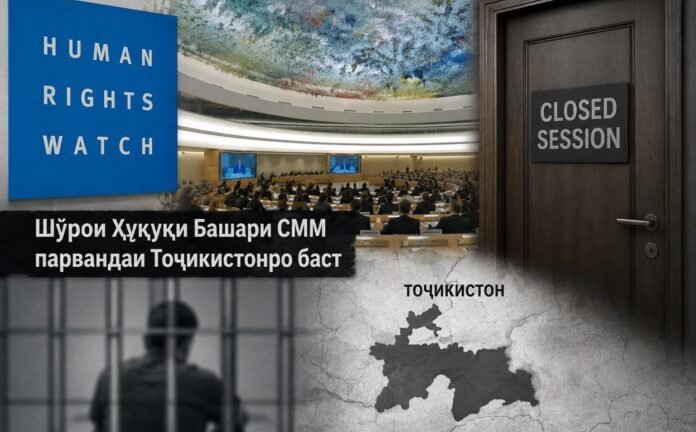
UN Human Rights Council closed the case against Tajikistan
The international organization Human Rights Watch criticized the decision of the UN Human Rights Council to cease consideration of cases against Tajikistan. The organization emphasized that “transparency and public participation are necessary to reveal information about human rights violations in Tajikistan.” In a statement from Human Rights Watch dated July 6, it was noted that […]
The international organization Human Rights Watch criticized the decision of the UN Human Rights Council to cease consideration of cases against Tajikistan. The organization emphasized that “transparency and public participation are necessary to reveal information about human rights violations in Tajikistan.”
In a statement from Human Rights Watch dated July 6, it was noted that the UN Human Rights Council in Geneva unexpectedly held a closed meeting regarding the human rights situation in Tajikistan. According to the organization, this meeting was convened in response to a complaint filed under the Council’s opaque procedure concerning gross human rights violations in Tajikistan.
However, there is no public information about the issues discussed at the meeting. The organization’s statement noted that this only exacerbates the already dire human rights situation in Tajikistan.
Tajikistan is among the most repressive states in Central Asia, the statement says. A large number of journalists, politicians, opposition figures, and civil activists are imprisoned for their views on government policy, hundreds of non-governmental organizations have been shut down, and there is systematic persecution of ethnic minorities in the Gorno-Badakhshan Autonomous Region. Authorities are actively engaged in transnational repression, targeting critics not only within the country but also abroad.
Human Rights Watch, referring to events in 2022 in the Gorno-Badakhshan Autonomous Region, stated that law enforcement severely suppressed peaceful protests, resulting in the deaths of about 40 people and the arrest of hundreds. During closed court proceedings, more than 200 people were sentenced to long prison terms. Among them were at least 20 human rights defenders, lawyers, and journalists who criticized the authorities’ actions, including journalist Ulfatkhanim Mamadshoeva and lawyer Manuchehr Kholiknazorov.
The organization noted that on July 3, the UN Human Rights Council ceased consideration of the complaint against Tajikistan without any public discussion or announcement of results. The Council’s chair merely stated that the government of Tajikistan had presented “measures and commitments” regarding the complaint, but their content was not disclosed.
Human Rights Watch states that the closed nature of such meetings is one of the main problems of this complaint review system. Although thousands of complaints are submitted annually, the public knows almost nothing about them.
According to the authors of the statement, reviewing complaints against repressive regimes in a closed manner, where victims have no right to participate and present their evidence, cannot contribute to improving the human rights situation.
At the end of its statement, Human Rights Watch urged the UN Human Rights Council to hold an open meeting with the participation of civil society organizations and independent observers, so that all “measures and commitments” declared by the government of Tajikistan are transparently monitored. Human Rights Watch emphasizes that in Tajikistan, as in other countries, only transparency and genuine public participation are key conditions for effectively countering serious human rights violations.