News
HUMAN RIGHTS POLITICS
What did the OSCE head discuss with Emomali Rahmon?
The Government of Tajikistan and the Organization for Security and Co-operation in Europe (OSCE) expressed their intentions to enhance cooperation in the areas of security and counter-terrorism. Some Tajik politicians say that this international organization should pay more attention to the activities of political parties, the electoral process, and freedom of speech. The Maltese Foreign […]
The Government of Tajikistan and the Organization for Security and Co-operation in Europe (OSCE) expressed their intentions to enhance cooperation in the areas of security and counter-terrorism.
Some Tajik politicians say that this international organization should pay more attention to the activities of political parties, the electoral process, and freedom of speech.
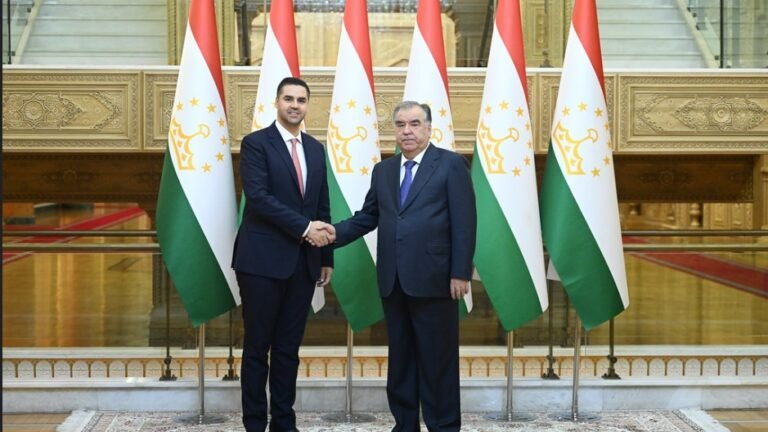
The Maltese Foreign Minister Ian Borg, who is chairing the OSCE this year, arrived in Dushanbe and met with Tajik President Emomali Rahmon on June 26. During the meeting, issues of cooperation between Tajikistan and the OSCE were discussed, with key topics including security, combating cybercrime, and preventing the misuse of the Internet for the purposes of promoting and inciting extremism.
“We also discussed how the OSCE can assist in border management and what we can do in this regard. Issues related to Afghanistan and the organization of regional cooperation were also considered,” Ian Borg told reporters.
Some experts believe that such attention to security issues, including counter-terrorism, has recently become very important for Tajikistan. “On the one hand, the number of such crimes has indeed increased. On the other hand, the whole world already knows that the Central Asian region has now become a theater of geopolitical struggle,” commented journalist Rajab Mirzo on the situation.
In his opinion, Tajikistan has been increasingly mentioned in major news regarding security and terrorism, so various countries and organizations may want to hear information about the situation directly from the country’s leadership.
But what about human rights?
Some politicians consider the OSCE’s activities in Tajikistan in recent years to be not very effective. According to Shokirdzhon Hakimov, Deputy Chairman of the Social Democratic Party of Tajikistan, this organization places issues of human rights compliance in Tajikistan, including freedom of speech, the activities of political parties, and elections, in a secondary position.
“More attention is paid to security, border and military issues, and combating drug trafficking. This is certainly good, but guarantees for the functioning of parties on the principle of equality, ensuring fair elections in accordance with the standards set by the OSCE, access to public positions regardless of candidates’ opinions and beliefs, ensuring a balanced information space for all, and the oversight functions of civil society – these issues receive less attention,” Hakimov emphasized.
The OSCE began its active and extensive activities during the civil war and in the post-war period. However, in 2016, relations between Tajikistan and this organization cooled after representatives of the Tajik opposition were allowed to attend the annual OSCE Human Rights Conference in Warsaw.
At that time, Tajik authorities stated that the OSCE provided a platform for individuals wanted and accused of terrorism and extremism. As a result of nearly a year of negotiations, the status of the OSCE Representation in Dushanbe was downgraded. The OSCE’s statements on protecting freedom of speech and the press are also not welcomed by the authorities.