News
ECONOMY
Will the construction of solar power plants lead to the cancellation of the limit?
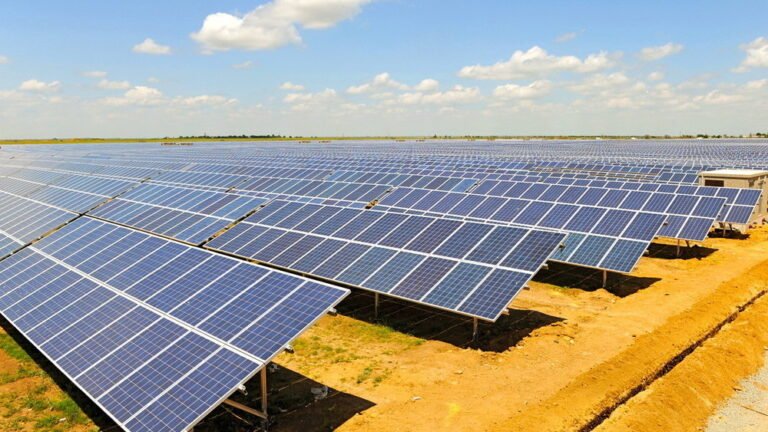
Solar power plants with a capacity of 500 MW will be built in the Sughd and Khatlon regions. On January 13, 2026, the government of Tajikistan and Aen Energy signed an investment agreement for the construction of two solar power plants with a total installed capacity of 500 MW. This was reported by the State […]
Solar power plants with a capacity of 500 MW will be built in the Sughd and Khatlon regions.
On January 13, 2026, the government of Tajikistan and Aen Energy signed an investment agreement for the construction of two solar power plants with a total installed capacity of 500 MW.
This was reported by the State Committee for Investments and State Property Management of Tajikistan.
The Committee noted that the project will be the first in the country with such a high installed capacity as part of the development of “green energy” and aimed at achieving energy independence.
The project involves the construction of two solar power plants with a capacity of 250 MW each in the Ahsht district of Sughd region and in the Jaihun district of Khatlon region.
According to the terms of the agreement, the investor is obliged to complete the design, construction, and commissioning of the facilities by the end of 2026. The total investment volume is estimated at 250 million dollars.
The authorities stated that the solar power plants should contribute to strengthening the country’s energy independence, reducing seasonal electricity shortages—especially in winter, alleviating the burden on the energy system, and ensuring more stable electricity supply for the population and the national economy.
At the same time, experts emphasize that Tajikistan still lacks practical experience in implementing large-scale solar energy projects, while the country’s energy sector remains largely dependent on hydroelectric power stations.
One of the most ambiguous aspects of the project is the investor’s commitment to complete the entire cycle of work—from design to construction and commissioning—in just one year, by the end of 2026. Given the previous experience of implementing large infrastructure projects, which often faced delays, cost increases, and financial uncertainty, such tight deadlines raise doubts.
Experts believe that the investment amount of 250 million dollars may be insufficient for the construction of solar power plants with a total capacity of 500 MW. Meanwhile, Tajik authorities, as before, do not disclose details about the sources of financing for such projects. Experts do not rule out the presence of government guarantees, as the details of the project, including the mechanism for selling the generated electricity, have not yet been officially presented.
The launch of the large-scale solar energy project comes against the backdrop of a severe electricity shortage in the country, which is particularly acute during the autumn-winter period. The authorities traditionally link outages to a lack of water in reservoirs. Experts question whether the production of such a volume of solar electricity can realistically affect the lifting of limits. It remains unclear how successful this project will be in providing electricity to the population.